12 Words and Phrases from The Simpsons
A perfectly cromulent way to embiggen your vocabulary
Definition: acceptable, satisfactory
About the word:
Cromulent first appeared in the February 18, 1996 episode of The Simpsons called “Lisa the Iconoclast.” The schoolchildren of Springfield are watching a film about the founding father of Springfield, Jebediah Springfield. The film ends with Jebediah intoning, “A noble spirit embiggens the smallest man.” One teacher at the back of the room leans over to another and says that she’d never heard the word embiggen before she moved to Springfield. “I don’t know why,” the other teacher replies. “It's a perfectly cromulent word.”
The word cromulent ended up in the script courtesy of a showrunner’s challenge to the writers. According to the DVD commentary for The Simpsons, the showrunners asked the writers to come up with two nonce words that sounded like words that could be in actual use. Writer David X. Cohen came up with cromulent as one of those words. It eventually crept into popular use, and was added to our dictionary in 2023.
Example:
Ebel also stole three bases this week and has upped his season total of thefts to 18. He's up to a .388 on-base percentage and .750 OPS, perfectly cromulent marks for a player in his first year of pro baseball.
—JR Radcliffe, The Milwaukee Journal Sentinel, 25 May 2026

Definition: to make bigger or more expansive, to enlarge or expand
About the Word:
As noted in the slide for cromulent, embiggen appeared alongside that word as a perfectly cromulent verb in the mouth of Springfield founder Jebediah Springfield when he said, “A noble spirit embiggens the smallest man.” Due to its widespread use, embiggen was added to our dictionary in 2017, slightly before cromulent.
Example:
The brown bears in Katmai National Park and Preserve in Alaska, famous for embiggening themselves by feasting on salmon in the park's scenic Brooks River, are ready for their annual closeup. The 2026 Fat Bear Week bracket came out on Friday, kicking off a competition to determine which bear has worked hardest to pack on pounds for hibernation.
—

Definition —used interjectionally to call attention to something and especially to remind
About the Phrase:
In a 1998 episode of The Simpsons titled “Lost Our Lisa,” Lisa Simpson inadvertently boards the wrong city bus. When she says hello to the driver, Larry, he points to a sign above the windshield that reads “DO NOT TALK TO DRIVER.” When she attempts to apologize for speaking to him (because talking to the bus driver is allowed on her school bus) he taps the sign repeatedly with his finger. When she realizes later that she’s on the wrong bus and asks Larry where she is, he says, “Don’t make me tap the sign.” Both taps sign and the full phrase don’t make me tap the sign are used today, especially online, for calling attention to something one feels others should already know or remember.
Example:
:Taps sign:
The number one rule of wearable design is that they must be comfy and stylistically versatile enough for everyday wear.
—
Definition: to take, nab, grab, steal, pilfer, etc.
About the Word:
In “Duffless,” a 1993 episode from season 4, Marge Simpson tries to persuade her husband, Homer, to go on a bike ride instead of going drinking at the bar, holding up a wad of money she tells him she found saved in his pants. Grabbing the money, Homer exclaims “Yoink!” Since then, yoink has been used both as an interjection to signal playful or humorous snatching of something and as a verb for the action of pilfering. Previously, yoink appeared in print in a 1968 Batman and Robin comic as a sound made by Albatross, a seal.
Example:
In the same week, PlayStation announced it was removing purchased digital content from account holders due to a license agreement with Studio Canal ending. These were not streaming subscriptions. They weren’t rented copies. These were movies that people paid full price for that were yoinked back out of people’s accounts, with no refunds given.
—

Definition: an interjection used to express sudden recognition of a foolish blunder or an ironic turn of events
About the Word:
Although d'oh has been popularized (some would say immortalized) by Homer Simpson’s repeated use of the interjection to respond to any one of numerous indignities or injuries, the word predates the television show on which it appears by several decades. The Oxford English Dictionary provides evidence of the word’s use in a BBC radio script from 1945. And since interjections occur in spoken form before they are written down, it is likely that d'oh! was in use for some while before that.
Example:
When the worker was taking my vitals, I jokingly asked if it was necessary to weigh me. After she nodded, I told her not to tell me the dreaded number (which I later stumbled across in the paperwork. D’oh!).
—

Definition: to inadvertently reveal something one wouldn’t normally want others to know
About the Phrase:
In a 1995 episode of The Simpsons titled “A Star Is Burns,” the character Krusty the Clown lets slip that he accepted a considerable amount of money from Mr. Burns to vote for the latter’s film to win a prize at a film festival. When asked by the film critic Jay Sherman why he voted for it, he says: “Let's just say it moved me… to a bigger house! Oops! I said the loud part quiet and the quiet part loud!” The phrase is now widely employed in a variety of contexts and in various permutations.
Example:
Nobody inside the Packers locker room wanted to say the quiet part out loud. Behind their empty stares, they're searching for football answers, understandable because there are football problems. Pass protection. Run blocking. Essentially every snap the offensive line is on the field.
—

Definition —used to point out or admit to a crotchety opinion, attitude, etc., suggestive of an old man
About the Phrase:
Old man yells at cloud comes from a 2002 episode titled “The Old Man of the Key,” and references a gag in which Abe Simpson, Homer’s elderly father, successfully lobbies for the DMV to issue him a new license using a photo of him taken for a local newspaper, instead of the usual one taken at the DMV. The scrap of newspaper is held up, showing a photo of Abe shaking his fist at a cloud in the sky with the headline “Old Man Yells At Cloud.” It has since become a popular meme.
Example:
Had an “Old Man Yells at Cloud” moment about restaurants not putting where the f*** they are on their Instagram pages
—
Definition: delicious and sacrilegious
About the Word:
In “Homer Loves Flanders,” a Season 5 episode that aired in 1994, Homer looks up toward the ceiling of his house and shakes his fist, exclaiming “Why do you mock me, oh Lord!” Marge then points out that what he addressing is not God, but a waffle stuck to the ceiling, proceeding to unstick it with the end of her broom. Homer then eats the waffle, still believing it is divine, and says “Mmmm… sacrilicious.”
Example:
A controversial ad showing a sacramental wafer being dipped into a jar of yeast spread during a Catholic mass has been released online. The video promotes locally owned AussieMite and finishes with the line “It’s sacrilicious.”
—
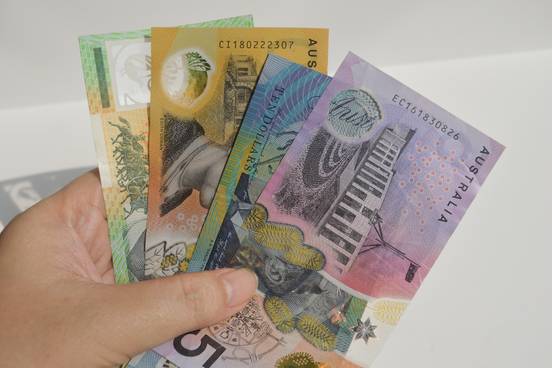
Definition: a dollar
About the Word:
The 1995 episode “Bart vs. Australia” pokes gentle fun at Australia throughout, including having an Australian character refer to Australian dollars as “dollarydoos.” It is interesting to note, however, that some Australians once started a petition to change the official name of the currency, receiving nearly 70,000 signatures, or “signaturydoos.”
Example:
Now it’s hardly a secret that universities across the U.S. rake in millions of dollarydoos from sports.
—
Definition: not impressive, so-so
About the Word:
Meh was not coined by The Simpsons, but it was popularized by the show. The earliest known evidence of meh comes from a 1992 post in a Usenet newsgroup, in which it is used—as it still is—as an interjection expressing indifference. It was first used on The Simpsons in a Season 6 (1994) episode, “Sideshow Bob Roberts,” used by a librarian as a comment on Lisa Simpson’s surprise that voting records aren’t classified. Records of adjectival use meaning “so-so” or “apathetic” (as in “the movie left me feeling meh”) date to the early 2000s.
Example:
Readers also complained about meh burgers, flavorless chicken, perpetually unavailable corn dogs and a “dry ass black bean burger.”
—
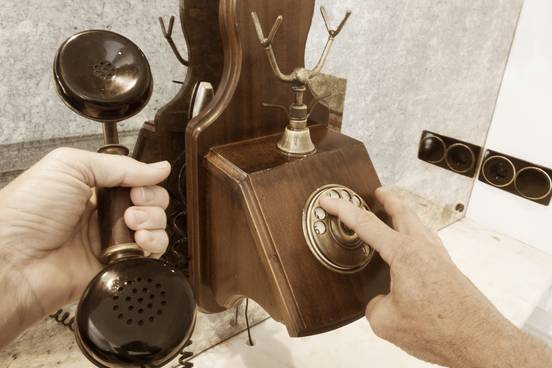
Definition —used interjectionally in greeting, in answering the telephone
About the Word:
Ahoy has traditionally been used in hailing, as in “ship ahoy!,” and comes from a- (as in aha) + hoy, an interjection used to attract or call attention to something. The Simpsons can’t be credited with coining the extended ahoy-hoy favored by Alexander Graham Bell as a telephone greeting (see example below), but it was used memorably by Montgomery Burns in a Season 7 episode as a joke signaling how very, very old the character is.
Example:
After the phone’s invention by Alexander Graham Bell in 1876, Thomas Edison decided that a new standardised greeting needed to be invented. Why? Because previously people tended to greet each other with time-based salutations, such as “good morning” or “good evening”. But the telephone could instantly cross time zones, which made these redundant. But why hello? Because Edison preferred it to Bell’s favoured “Ahoy-hoy”.
—
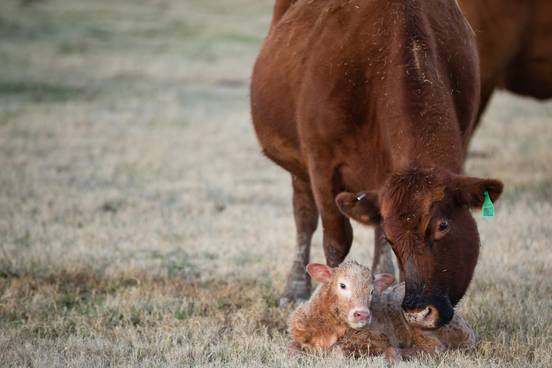
Definition: relax, don’t get upset, calm down, etc.
About the Phrase:
Don’t have a cow, man was, in the early days of The Simpsons’ popularity, considered a catchphrase of Bart Simpson, who used it a couple of times in the first season. It was featured heavily in Simpsons merchandise, emblazoning t-shirts and other show memorabilia.
And as for the Bart Simpson doll, which will be out in the spring, it will also say “Don’t have a cow, man,” and “Au contraire, mon frere.”
—
Example:
This mockumentary put the excesses of heavy metal music on display, and most of us had a good laugh, however, some die-hard metal heads found it offensive. Don’t have a cow, man!
—